
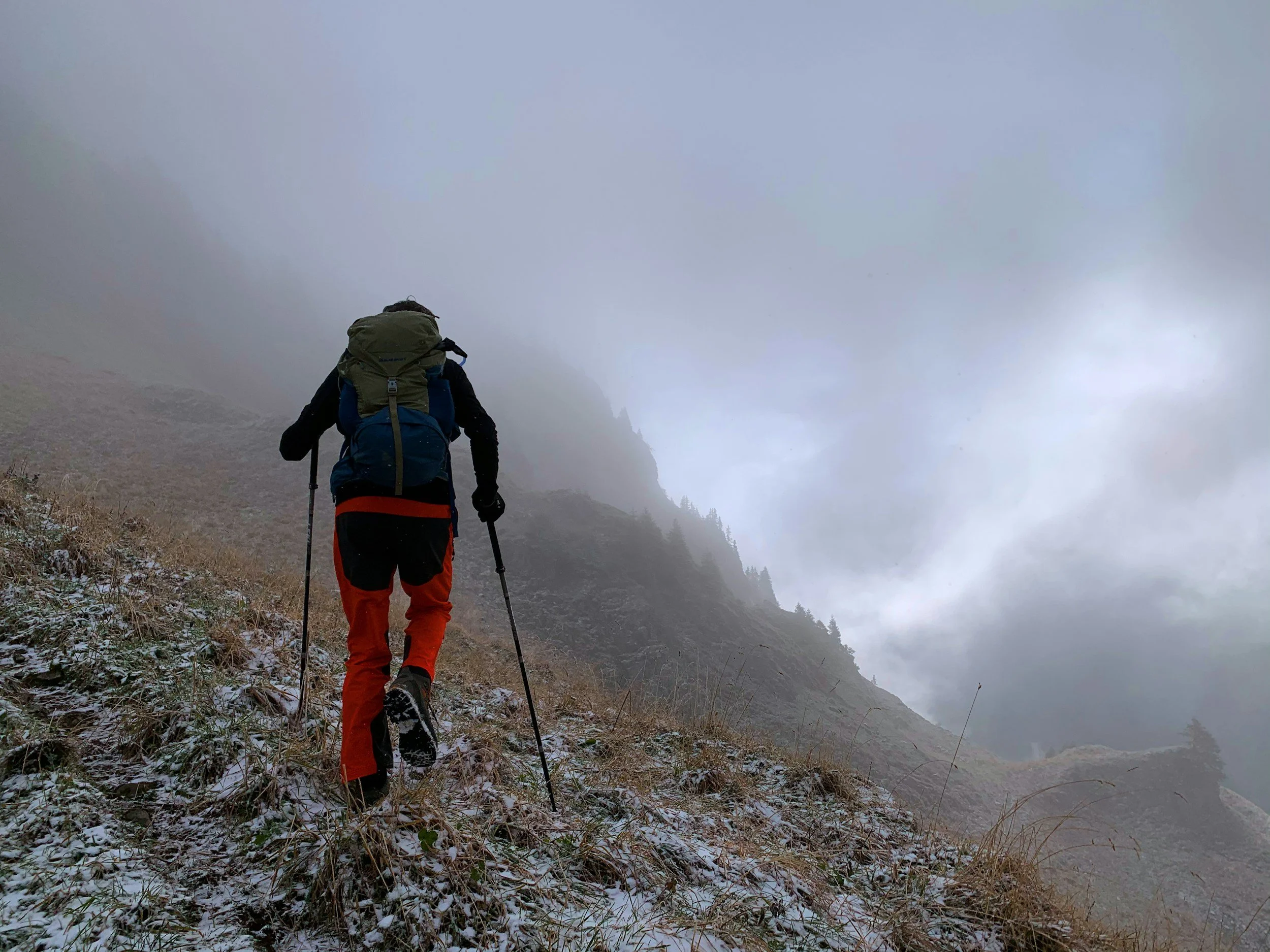
Benefits of Trekking Poles
Why we use them…
Trekking Pole History:
Trekking poles originated in the Alps, where early mountaineers and shepherds used wooden staffs, called alpenstocks, for balance on steep and snowy terrain. As skiing grew in popularity across Europe in the early 1900s, the design evolved into shorter poles used in pairs for better stability and movement. In the 1970s, companies like LEKI developed the first adjustable trekking poles specifically for hiking. Today, trekking poles are a trusted tool for hikers and snowshoers, helping people move more safely, efficiently, and confidently through the mountains—especially in winter conditions.
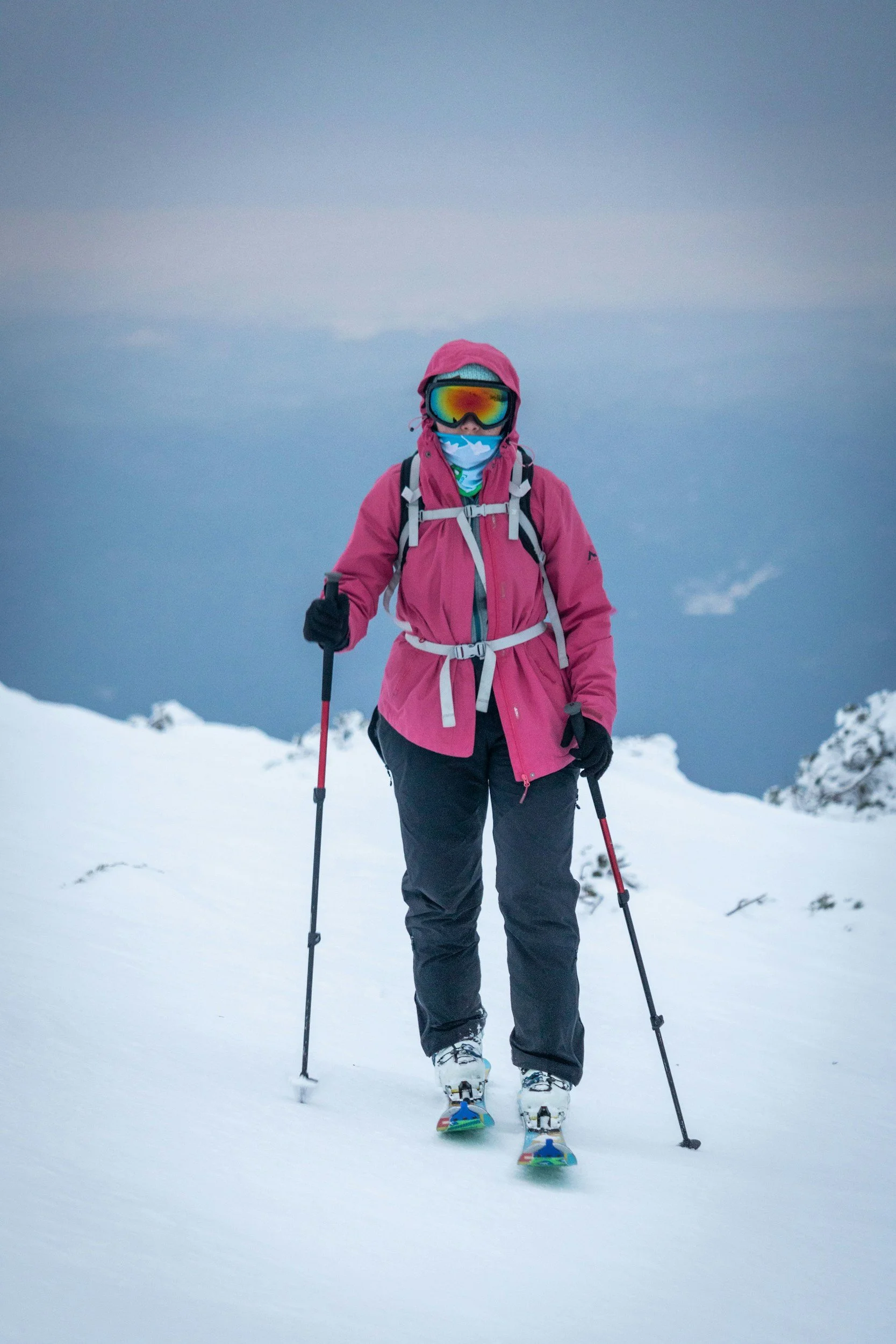
Why trekking poles matter in winter:
1. Improved balance on snow and ice: Poles give you two additional points of contact, helping prevent slips and falls on slick or uneven surfaces.
2. Reduced strain on knees and joints: Especially when descending snowy trails, poles absorb impact and reduce stress on your body.
3. Better stability on uneven terrain: Hidden rocks, roots, and uneven snowpack can be unpredictable—poles help you test the ground before committing your weight.
4. Increased endurance: By engaging your upper body, poles distribute effort more evenly, helping you go farther with less fatigue.
5. Confidence in uncertain conditions: Winter environments can feel intimidating, and poles provide both physical and mental reassurance.
Don’t forget!
they’re just as valuable year-round
They remain incredibly useful throughout the summer months. On long climbs, poles help maintain a steady rhythm and take pressure off your legs, allowing you to conserve energy and hike farther with less fatigue. During descents, they reduce impact on your knees and provide stability on loose dirt, rocks, and uneven terrain. They’re also helpful for stream crossings and maintaining balance with a heavier pack.
1. Support on steep climbs and descents in summer
2. Improved posture and rhythm while hiking
3. Reduced joint impact on long-distance treks
4. Useful for stream crossings and uneven terrain